
Assessment of mathematical modeling competency among undergraduates in Hebei province
##plugins.themes.bootstrap3.article.sidebar##
##plugins.themes.bootstrap3.article.main##
Abstract
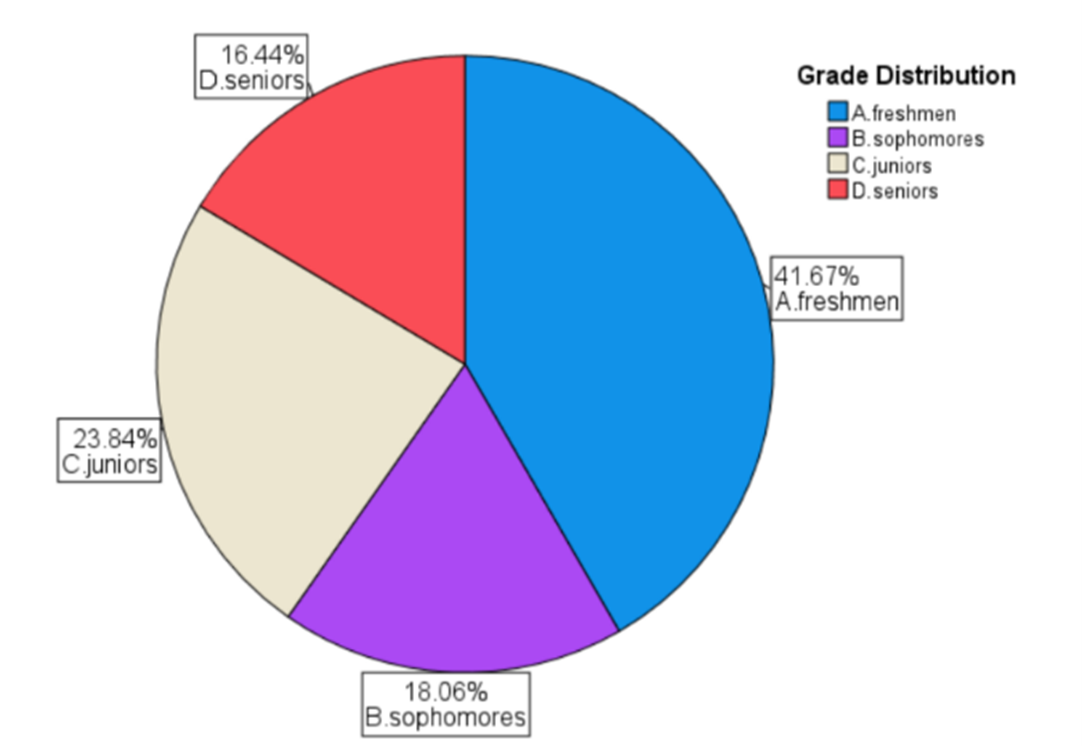
Mathematical modeling competency, a key skill for applying mathematical knowledge to solve real-world problems, has gained increasing attention across various fields. Research indicates that students' mathematical modeling competencies are generally low. However, few studies investigate students' mathematical modeling competency, making it challenging to reflect their specific level of competency accurately. This study examines the current status of mathematical modeling competencies among undergraduates in Hebei Province. Adopting a quantitative cross-sectional survey approach, 432 undergraduates were investigated. The data were analyzed through descriptive statistics, t-test, and one-way ANOVA. The findings reveal that the total mathematical modeling competency (Mean=26.14, SD = 7.45) and the eight sub-competencies of undergraduates in Hebei Province are at a medium level. While there were no significant gender differences (t = -0.24, P = 0.808), notable differences across grade levels were observed (F = 4.46, P = 0.004). These findings have important implications for mathematics education programs. First, the lack of gender differences suggests that inclusive learning environments should continue to be promoted, ensuring equal support for all students. Second, the grade-level differences indicate the need for greater focus on developing foundational mathematical modeling competency in the early years of education.
##plugins.themes.bootstrap3.article.details##

This work is licensed under a Creative Commons Attribution-ShareAlike 4.0 International License.
The author is responsible for acquiring the permission(s) to reproduce any copyrighted figures, tables, data, or text that are being used in the submitted paper. Authors should note that text quotations of more than 250 words from a published or copyrighted work will require grant of permission from the original publisher to reprint. The written permission letter(s) must be submitted together with the manuscript.References
Alkan, Y., & Aydin, M. (2021). Investigating the change in middle school students’ mathematical modeling competencies according to their reading comprehension skills levels. Kuramsal Eğitimbilim, 14(4), 605–637. https://doi.org/10.30831/akukeg.892457
Attaran, M. (2023). The impact of 5G on the evolution of intelligent automation and industry digitization. Journal of Ambient Intelligence and Humanized Computing, 14(5), 5977–5993. https://doi.org/10.1007/s12652-020-02521-x
Banerjee, S. (2021). Mathematical modeling: Models, analysis and applications (2nd ed.). Chapman and Hall/CRC. https://doi.org/10.1201/9781351022941
Blomhøj, M., & Jensen, T. H. (2003). Developing mathematical modelling competence: conceptual clarification and educational planning. Teaching Mathematics and its Applications, 22(3), 123–139. https://doi.org/10.1093/teamat/22.3.123
Blomhøj, M., & Jensen, T. H. (2007). What’s all the fuss about competencies? In W. Blum, P. L. Galbraith, H.-W. Henn, & M. Niss (Eds.), Modelling and applications in mathematics education: The 14th ICMI study (pp. 45–56). Springer US. https://doi.org/10.1007/978-0-387-29822-1_3
Blum, W., & Leiß, D. (2007). Investigating quality mathematics teaching: The DISUM project. In proceedings of MADIF: Developing and researching quality in mathematics teaching and learning.
Blum, W., & Niss, M. (1991). Applied mathematical problem solving, modelling, applications, and links to other subjects — State, trends and issues in mathematics instruction. Educational Studies in Mathematics, 22(1), 37–68. https://doi.org/10.1007/BF00302716
Borgonovi, F., Han, S. W., & Greiff, S. (2023). Gender differences in collaborative problem-solving skills in a cross-country perspective. Journal of Educational Psychology, 115(5), 747–766. https://doi.org/10.1037/edu0000788
Cevikbas, M., Kaiser, G., & Schukajlow, S. (2022). A systematic literature review of the current discussion on mathematical modelling competencies: state-of-the-art developments in conceptualizing, measuring, and fostering. Educational Studies in Mathematics, 109(2), 205–236. https://doi.org/10.1007/s10649-021-10104-6
Chen, Q., Zhu, G., Liu, Q., Han, J., Fu, Z., & Bao, L. (2020). Development of a multiple-choice problem-solving categorization test for assessment of student knowledge structure. Physical Review Physics Education Research, 16(2), 020120.
Doerr, H. M., & English, L. D. (2003). A modeling perspective on students' mathematical reasoning about data. Journal for Research in Mathematics Education JRME, 34(2), 110–136. https://doi.org/10.2307/30034902
Ferri, R. B. (2018). Learning how to teach mathematical modeling in school and teacher education. https://doi.org/10.1007/978-3-319-68072-9
Fıtrıanı, A., Zubaıdah, S., Susılo, H., & Al Muhdhar, M. H. İ. (2020). The effects of integrated problem-based learning, predict, observe, explain on problem-solving skills and self-efficacy. Eurasian Journal of Educational Research, 20(85), 45–64. https://dergipark.org.tr/en/pub/ejer/article/684972
Frejd, P. (2013). Modes of modelling assessment—a literature review. Educational Studies in Mathematics, 84(3), 413–438. https://doi.org/10.1007/s10649-013-9491-5
Geiger, V., Galbraith, P., Niss, M., & Delzoppo, C. (2021). Developing a task design and implementation framework for fostering mathematical modelling competencies. Educational Studies in Mathematics, 109(2), 313–336. https://doi.org/10.1007/s10649-021-10039-y
Haines, C., Crouch, R., & Davis, J. (2001). Understanding students' modelling skills. In J. F. Matos, W. Blum, K. Houston, & S. P. Carreira (Eds.), Modelling and mathematics education (pp. 366–380). Woodhead Publishing. https://doi.org/10.1533/9780857099655.5.366
Haines, C., Crouch, R., & Fitzharris, A. (2003). Deconstructing mathematical modelling: Approaches to problem solving. In Q.-X. Ye, W. Blum, K. Houston, & Q.-Y. Jiang (Eds.), Mathematical modelling in education and culture (pp. 41–53). Woodhead Publishing. https://doi.org/10.1533/9780857099556.1.41
Hidayat, R., Hermandra, H., & Ying, S. T. D. (2023). The sub-dimensions of metacognition and their influence on modeling competency. Humanities and Social Sciences Communications, 10(1), 763. https://doi.org/10.1057/s41599-023-02290-w
Hidayat, R., Zulnaidi, H., & Zamri, S. N. A. S. (2018). Roles of metacognition and achievement goals in mathematical modeling competency: A structural equation modeling analysis. PLoS One, 13(11), e0206211. https://doi.org/10.1371/journal.pone.0206211
Hozo, S. P., Djulbegovic, B., & Hozo, I. (2005). Estimating the mean and variance from the median, range, and the size of a sample. BMC Medical Research Methodology, 5(1), 13. https://doi.org/10.1186/1471-2288-5-13
Kahu, E. R., Picton, C., & Nelson, K. (2020). Pathways to engagement: a longitudinal study of the first-year student experience in the educational interface. Higher Education, 79(4), 657–673. https://doi.org/10.1007/s10734-019-00429-w
Kaiser, G. (2017). The teaching and learning of mathematical modeling. In J. Cai (Ed.), Compendium for research in mathematics education (pp. 267–291). The National Council of Teachers of Mathematics, Inc.
Kaiser, G., & Maaß, K. (2007). Modelling in lower secondary mathematics classroom — Problems and opportunities. In W. Blum, P. L. Galbraith, H.-W. Henn, & M. Niss (Eds.), Modelling and applications in mathematics education: The 14th ICMI study (pp. 99–108). Springer US. https://doi.org/10.1007/978-0-387-29822-1_8
Kaiser, G., & Sriraman, B. (2006). A global survey of international perspectives on modelling in mathematics education. Zdm, 38(3), 302–310. https://doi.org/10.1007/BF02652813
Kaiser, R. H., Andrews-Hanna, J. R., Wager, T. D., & Pizzagalli, D. A. (2015). Large-scale network dysfunction in major depressive disorder: A meta-analysis of resting-state functional connectivity. JAMA Psychiatry, 72(6), 603–611. https://doi.org/10.1001/jamapsychiatry.2015.0071
Kaygısız, İ., & Şenel, E. A. (2023). Investigating mathematical modeling competencies of primary school students: Reflections from a model eliciting activity. Journal of Pedagogical Research, 7(1), 1–24. https://doi.org/10.33902/jpr.202317062
Lesh, R., & Zawojewski, J. (2007). Problem solving and modeling. In F. K. Lester (Ed.), Second handbook of research on mathematics teaching and learning: A project of the national council of teachers of mathematics (pp. 763–804). Information Age Publishing.
Lingefjärd, T. (2004). Assessing engineering student’s modeling skills. In International Conference on the Teaching of Mathematics at the Mathematical Society.
Ludwig, M., & Reit, X.-R. (2013). A cross-sectional study about modelling competency in secondary school. In G. A. Stillman, G. Kaiser, W. Blum, & J. P. Brown (Eds.), Teaching mathematical modelling: Connecting to research and practice (pp. 327–337). Springer Netherlands. https://doi.org/10.1007/978-94-007-6540-5_27
Niss, M. (2015). Mathematical competencies and PISA. In K. Stacey & R. Turner (Eds.), Assessing mathematical literacy: The PISA experience (pp. 35–55). Springer International Publishing. https://doi.org/10.1007/978-3-319-10121-7_2
Niss, M., & Højgaard, T. (2019). Mathematical competencies revisited. Educational Studies in Mathematics, 102(1), 9–28. https://doi.org/10.1007/s10649-019-09903-9
Paz-Baruch, N., & Spektor-Levy, O. (2024). How the relationship between individual and social factors informs the narrowing of gender gaps in elementary mathematical achievements. Frontiers in Education, 9, 1339040. https://doi.org/10.3389/feduc.2024.1339040
Perrier, X. (2009). Combining biological approaches to shed light on the evolution of edible bananas. Ethnobotany Research and Applications, 7, 199–216. https://doi.org/10.17348/era.7.0.199-216
Piirto, J. (2021). Talented children and adults: Their development and education. Routledge. https://doi.org/10.4324/9781003238485
Rossi, S., Xenidou-Dervou, I., Simsek, E., Artemenko, C., Daroczy, G., Nuerk, H.-C., & Cipora, K. (2022). Mathematics–gender stereotype endorsement influences mathematics anxiety, self-concept, and performance differently in men and women. Annals of the New York Academy of Sciences, 1513(1), 121–139. https://doi.org/10.1111/nyas.14779
Schneider, T., Lan, S., Stuart, A., & Teixeira, J. (2017). Earth system modeling 2.0: A blueprint for models that learn from observations and targeted high-resolution simulations. Geophysical Research Letters, 44(24), 12396–12417. https://doi.org/10.1002/2017GL076101
Seçgin, M. G., Başkurt, İ., & Güner, P. (2024). Mathematical literacy of primary school students in the context of mathematical modeling. Journal of Pedagogical Sociology and Psychology, 6(3), 149–175. https://doi.org/10.33902/jpsp.202430538
Stanley, S. D., & Robertson, W. B. (2024). Qualitative research in science education: A literature review of current publications. European Journal of Science and Mathematics Education, 12(2), 175–199. https://doi.org/10.30935/scimath/14293
Stillman, G. (2011). Applying metacognitive knowledge and strategies in applications and modelling tasks at secondary school. In G. Kaiser, W. Blum, R. Borromeo Ferri, & G. Stillman (Eds.), Trends in teaching and learning of mathematical modelling (pp. 165–180). Springer Netherlands. https://doi.org/10.1007/978-94-007-0910-2_18
Wang, B., & Driscoll, C. (2019). Chinese feminists on social media: articulating different voices, building strategic alliances. Continuum, 33(1), 1–15. https://doi.org/10.1080/10304312.2018.1532492
Wang, C., Zheng, Y., & Chang, H.-H. (2014). Does standard deviation matter? Using “Standard Deviation” to quantify security of multistage testing. Psychometrika, 79(1), 154–174. https://doi.org/10.1007/s11336-013-9356-y
Wilhelm, S., Förster, R., & Zimmermann, A. B. (2019). Implementing competence orientation: Towards constructively aligned education for sustainable development in university-level teaching-and-learning. Sustainability, 11(7), 1891. https://doi.org/10.3390/su11071891
Xu, B., Lu, X., Yang, X., & Bao, J. (2022). Mathematicians’, mathematics educators’, and mathematics teachers’ professional conceptions of the school learning of mathematical modelling in China. ZDM – Mathematics Education, 54(3), 679–691. https://doi.org/10.1007/s11858-022-01356-4
Yang, X., Schwarz, B., & Leung, I. K. C. (2021). Pre-service mathematics teachers’ professional modeling competencies: a comparative study between Germany, Mainland China, and Hong Kong. Educational Studies in Mathematics, 109(2), 409–429. https://doi.org/10.1007/s10649-021-10064-x
Zheng, S. X., & Leong, K. E. (2025). Metacognition’s mediating effect on undergraduate achievement goals and mathematical modelling competency. International Journal of Instruction, 18(2), 455–472. https://doi.org/10.29333/iji.2025.18225a
Zimmerman, B. J., Schunk, D. H., & DiBenedetto, M. K. (2017). The role of self-efficacy and related beliefs in self-regulation of learning and performance. Handbook of competence and motivation: Theory and application, 313, 41–50.